Pink eye and sore throat: Link, causes, and treatment


10 Causes Of Eye Discomfort
If a person can feel something in their eye, it is typically an eyelash, some dust, or a grain of sand. However, abrasions, infections, ulcers, dry eyes, and other health issues can cause a similar feeling.
Dry eyes and inflammation of the eyelids can make it feel as though something is in the eye. Some causes of this sensation are benign, while others might require immediate medical attention to prevent vision loss.
Read on to learn about why a person might feel that something is in the eye, as well as some ways to relieve the discomfort.
The cornea is the dome-shaped window on the surface of the eye. It is possible to damage the cornea.
For example, a person who accidentally scratches their cornea with their fingernail, a makeup brush, or a foreign object may experience the feeling that something is in their eye — despite not being able to find a foreign object.
TreatmentAccording to the American Academy of Ophthalmology (AAO), a small abrasion should take 1–2 days to heal, whereas a larger one may take 1 week.
Some treatment options include:
A corneal laceration involves a cut in the cornea and is deeper than a corneal abrasion. The cut can partially or fully lacerate the cornea. Typically, this occurs due to trauma from a sharp object flying into or striking the eye.
TreatmentAccording to the AAO, a corneal laceration is serious, and to prevent loss of vision, a person should seek immediate medical attention.
If a laceration occurs, a person should place a shield, such as the bottom of a plastic cup, over the eye for protection. They should then see an ophthalmologist.
A person should avoid:
A corneal ulcer is an open sore on the cornea. A person can develop ulcers from severe dry eyes, infections, or other eye conditions. Some signs and symptoms of a corneal ulcer may include:
An eye doctor might prescribe eye drops to treat the infection. After the infection has gone, they may prescribe steroid or anti-inflammatory eye drops to prevent scarring. For steroid eye drops, it is important to follow the dosing instructions carefully.
Surgical treatment may also be an option. A corneal transplant may be necessary if the ulcer has caused significant scarring or the person experiences a loss of vision.
Fungal keratitis is an infection of the cornea. Fungal keratitis can develop as a result of contact lens use or injury to the eye. Different fungi can cause fungal keratitis, including Fusarium, Aspergillus, and Candida. People with fungal keratitis may feel as though there is something in their eye.
Other symptoms may include:
Treatment options for fungal keratitis may include antifungal medications such as natamycin, amphotericin B, or voriconazole for several months.
If the infection does not improve, a corneal transplant may be necessary.
Sjögren's syndrome, also known as Sjögren's disease, is an autoimmune condition. It develops when the immune cells attack and damage the tear and saliva glands. Sjögren's affects around 1–4 million people in the U.S., who are typically over the age of 50. Females are also more likely to develop Sjogren's syndrome.
The two main symptoms are dry eyes and dry mouth, due to the body not being able to produce tears or enough saliva. Other symptoms affecting the eyes and mouth may include:
The treatment for Sjogren's syndrome includes using artificial tears during the day. During the night, a person can use a gel. Prescription eye drops are also an option.
When outside, a person can wear sunglasses or goggles to help shield the eyes and prevent tears from evaporating.
If it is more severe, punctal occlusion might help. This procedure requires an eye doctor to put small plugs in the tear ducts to block them. This can help tears stay on the eyes for longer, thereby keeping them moist.
Dry eye describes when the eyes produce too few tears, or the tears evaporate too quickly. As the name suggests, this can cause the eyes to feel dry, uncomfortable, and as if something is in the eye.
Dry eye is typically more common in people over 65, females, those in drier climates, people who take certain medications, such as antihistamines, antidepressants, blood pressure medications, and individuals with certain medical conditions, such as rheumatoid arthritis, thyroid problems, and diabetes.
TreatmentArtificial tears are over-the-counter (OTC) solutions that help treat dry eyes. Eye doctors may recommend preservative-free eye drops, since these cause less irritation.
A person can also relieve dry eyes at home by blinking regularly, maintaining hydration, and increasing the humidity in the surroundings, if possible.
Blepharitis describes inflammation of the eyelids. Typically, this results in redness, stickiness of the eyelid, and clumping of scaly skin around the base of the eyelashes. It can also cause the sensation of a foreign body in the eye.
Blepharitis often occurs due to an inflammatory reaction in response to an eye infection. Eye doctors sometimes diagnose blepharitis in people with seborrheic dermatitis of the face and scalp, which also causes flaking of the skin.
TreatmentIn blepharitis, treatment includes good eyelid hygiene practices and warm compresses. This may involve cleaning the eyelids with baby shampoo or lid scrubs. It may also include applying topical antibiotics to the lid margins for 2–8 weeks.
Some people may need oral antibiotics or corticosteroids for blepharitis cases that do not respond to topical treatment.
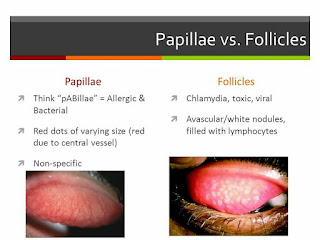
Also known as "pink eye," conjunctivitis causes inflammation of the conjunctiva. This is the transparent, lubricating membrane covering the surface of the eye, except the cornea.
Symptoms of conjunctivitis include:
The most common causes of conjunctivitis include viruses, bacteria, and allergens.
TreatmentIf allergies or adenoviruses are the cause of conjunctivitis, artificial tears may help relieve the symptoms.
A person with conjunctivitis may require antibiotics, depending on the cause of the infection. Eye doctors can prescribe either antibiotic drops or ointments.
Sometimes, oral or intramuscular antibiotics may be necessary.
A chalazion is a growth inside the eyelid. It typically starts off as a painless lump, but it can cause impaired vision and discomfort with time. It typically occurs due to blockage and swelling of an oil gland in the eyelid.
TreatmentChalazia may not require treatment, as they tend to be self-limiting and benign. Research suggests that most cases of chalazia resolve after roughly 1 month with proper eye hygiene techniques. Treatment options include using a warm compress 3–5 times per day for 10–15 minutes.
Medication includes steroids. Or, if an eye doctor suspects that the cause is an infection, a person can take antibiotics instead. For persistent lesions, surgery may be necessary.
Pinguecula causes yellowish growths to develop on the conjunctiva. Eye doctors typically find this condition on the side of the eye closest to the nose.
People with pterygium, or surfer's eye, have fleshy growths on their conjunctiva that may have originated as a pinguecula. A pterygium can stay small, but if it grows large, it may affect a person's vision.
Eye doctors believe that pinguecula and pterygium develop due to exposure to UV light, wind, and dust.
TreatmentAlthough surgeons can remove these growths, they may grow back. Eye protection measures such as wrap-around sunglasses and artificial tears can help prevent regrowth.
A person with a corneal laceration or ulcer requires immediate medical attention to prevent vision loss.
Anyone who thinks that they have a foreign body in their eye should consult with an eye doctor for a full eye examination. A person should also contact an eye doctor if they are unable to identify a foreign object that may be causing eye discomfort.
If treatment for foreign body sensation is unsuccessful, a person should consult an eye doctor for follow-up.
When artificial tears are inadequate to lubricate the eyes, a person should see an eye doctor. They can recommend other treatments and suggest follow-up appointments to prevent the progression to advanced dry eye. People with advanced dry eyes might eventually experience vision loss.
Doctors can also diagnose the cause of dry eye, such as a medical condition or certain medication, and suggest different strategies to treat them.
People with eye infections should consult a doctor to determine whether or not treatment with antibiotics is necessary.
Anyone with eye pain, vision loss, severe discharge, scarring of the conjunctiva, or a frequent feeling that something is in the eye should consult an ophthalmologist or optometrist.
Some frequently asked questions about eye discomfort and removing foreign objects from the eye may include:
Why do I feel like something is in my eye but nothing there?Many eye conditions can cause a gritty sensation in the eye. In many cases, the exact cause may not be obvious or visible.
How do you get rid of something is in the eye that you cannot see?If a person is experiencing a foreign body sensation in their eye, home remedies can help provide relief. Options can include using artificial tears and a warm compress using a warm washcloth. If these do not resolve discomfort, a person should consult a doctor.
What does it mean if your eye feels like it has something in it, it hurts, and keeps watering up?There are many possible causes for why a person may experience eye discomfort. These can include corneal abrasions and lacerations, ulcers, keratitis, dry eye, infections, chalazions, pinguecula, and pterygium.
A person may feel as though there is something in their eye for one of many reasons. Some may involve actual foreign objects, but others may not.
Dry eyes and conjunctivitis are two reasons that a person may feel as though something is in their eye. OTC artificial tears can help resolve this symptom. Other infections and injuries to the eye may require urgent medical attention.
Anyone who suspects that they have an infection or eye injury should consult an eye doctor to prevent long-term damage and vision loss.
Harrow's Dry Eye Treatment Hits The Market
According to the company, cyclosporine ophthalmic solution 0.1% is the first and only cyclosporine-based product for treating the signs and symptoms of dry eye disease.
(Image Credit: AdobeStock/あんみつ姫)
Harrow announced that cyclosporine ophthalmic solution 0.1% (Vevye) a patented, non‑preserved, twice-daily (BID) dosed prescription drug based on a "water‑free" semifluorinated alkane eyedrop technology, is now available in the United States.
According to a news release from the company,1 the solution also is backed by a 100% money-back guarantee program.
Cyclosporine ophthalmic solution 0.1% is dispensed in a 10 microliter drop, and is the first and only cyclosporine‑based product indicated for treating both the signs and symptoms of dry eye disease (DED).
In the news release, Harrow Chairman and CEO Mark L Baum noted the company is pleased to announce the availability of cyclosporine ophthalmic solution 0.1% for its customers and their patients.
"Vevye is
"Because of Vevye's unique combination of both a potent 0.1% cyclosporine solute and a pH- and osmolarity-free semifluorinated alkane, Vevye is both evolutionary and revolutionary, solving an unmet need for eyecare professionals treating the tens of millions of American chronic dry eye disease sufferers," Baum added.
Dry eye disease (DED) is a common condition that occurs when the eyes do not produce enough tears or when the tears evaporate too quickly, and it is often associated with chronic inflammation. Untreated DED can lead to discomfort such as stinging, burning or blurry vision, and chronic DED can interfere with daily activities like reading and using a computer. More serious consequences include increased risk of eye infections and damage to the surface of the eye, which can potentially result in serious vision problems and even loss of sight.1
John D Sheppard, MD, MMSc, FACS, a corneal external disease fellowship-trained ophthalmologist and founding senior partner of Virginia Eye Consultants, Norfolk, Virginia, has served as principal investigator in over 120 clinical trials, half of which targeted dry eye disease.
"As participants in Vevye's clinical trials, our team found the results to be compelling," he said in the news release. "The data in both consecutive registration trials demonstrated impressive efficacy, safety and tolerability, with rapid clinical onset beginning as early as 15 days and continuous improvement for more than one year."
Moreover, Sheppard noted the solution represents "not just an innovative treatment; it exemplifies the penultimate synthesis of outstanding vehicle with cyclosporine, the active pharmaceutical ingredient, boasting a superlative decades-long track record."
"Tolerability and risk profile are impressive compared with most existing dry eye products, portending improved patient compliance. Indicated for both signs and symptoms, Vevye should expand the market and fundamentally enhance dry eye disease treatment algorithms" he concluded in the news release.
William B Trattler, MD, a cataract, refractive, and corneal surgeon and Director of Cornea at the Center for Excellence in Eye Care, Miami, Florida, pointed out that as an eyecare professional, he recognizes the critical need for a dry eye product that not only acts swiftly and effectively, but also is comfortable enough to encourage continued patient use.
"A dry eye product that is well tolerated, has no or mild discomfort or adverse effects, and can easily be incorporated into a patient's daily routine is key to successful long-term management of dry eye syndrome," he said in the news release. "Vevye's twice‑daily dosing should also contribute to patient compliance, thus promoting overall effectiveness of the treatment. I am excited to see the positive changes that VEVYE can bring to patients suffering from dry eye disease."
Richard Adler, MD, a corneal, refractive, and external disease fellowship-trained ophthalmologist at Belcara Health, Baltimore, Maryland, pointed out that cyclosporine ophthalmic solution 0.1% continues the trend of advanced cyclosporine formulations coming to market that are designed to address key issues of onset of action and tolerability.
"As the first cyclosporine with an FDA indication for signs and symptoms and the first anti‑inflammatory drop in the new category of anhydrous or water-free formulations, Vevye is well-positioned to add unique clinical value to the expanding market of excellent anti-inflammatory dry eye disease therapeutics," Adler said in the news release.
Paul Karpecki, OD, FAAO, director, cornea and external disease, Kentucky Eye Institute, and associate professor, Kentucky College of Optometry UPIKE, Lexington, Kentucky, noted that when a patient presents with dry eye disease, it is often difficult to initially classify them into a specific category, such as aqueous deficient, evaporative, or a combination of the two.
"In addition, they often present with inflammation leading to many of their dry eye symptoms. That is why Vevye, with cyclosporine in a semifluorinated alkane solution, provides us with a valuable tool to address the signs and symptoms of dry eye holistically, regardless of etiology," he said in the news release.
Courtney Bovee, MD, cataract and glaucoma surgeon at The Macula Center and Blue Ocean Clinical Research Center, Tampa Bay, Florida, has been anticipating the release of cyclosporine ophthalmic solution 0.1%.
"As a glaucoma specialist who treats advanced glaucoma, I've been looking forward to the availability of Vevye, a 2-hit treatment for ocular surface disease targeting longstanding inflammation and corneal damage in as quickly as 15 days," Bovee said in the release. "A large portion of patients with glaucoma also have dry eye disease with extensive cornea damage due to the use of topical glaucoma medications. I look forward to the rapid relief my patients will receive from the addition of preservative-free VEVYE."
John A Hovanesian, MD, a cataract, corneal and laser eye surgeon and a principal at Harvard Eye Associates, Laguna Hills, California, pointed out that the solution has been a long time coming.
"Clinicians have been waiting a long time for a dry eye treatment that combines the effectiveness of cyclosporine with the tolerability of this unique semifluorinated alkane vehicle," he said in the news release. "In Vevye, the vehicle makes all the difference, allowing the product to spread evenly over the ocular surface with longer residual time and increased penetration of cyclosporine."
According to the company, eyecare professionals can send prescriptions for cyclosporine ophthalmic solution 0.1% using their electronic medical record (EMR), directly to Harrow's dedicated pharmacy partner, PhilRx. Prescriptions can also be sent to any retail pharmacy. Vevye is fully stocked in the wholesale distribution channel and can be shipped to any retail pharmacy, generally within 24 hours of order placement.
Moreover, Harrow noted in its news release, Vevye is also available directly through wholesale distributors, including McKesson, Cardinal and Cencora (f/k/a AmerisourceBergen).
Harrow also has established a VEVYE Patient Access program, under which eligible patients may receive their first VEVYE prescription for as low as $0.
References:What Types Of Eye Doctors Are There?
There are three main types of eye care practitioners: optometrists, opticians, and ophthalmologists. Each has a different level of training and expertise, and each will provide different levels of care.
Ophthalmologists are doctors who treat eye diseases, optometrists are specialists who provide primary eye care, and opticians are trained professionals who work in a retail setting.
This article reviews the differences between optometrists, opticians, and ophthalmologists. It also discusses the roles of other eye care practitioners, including nurses, medical assistants, and technicians.
Optometrists provide primary vision care. Their services range from eyesight testing and correction to diagnosing, treating, and managing changes in vision.
A person who is training to become an optometrist attends optometry school, not medical school. It can take 4 years of postgraduate studies to obtain a doctorate in optometry.
The practice of optometry involves:
Optometrists are not surgical specialists and they do not usually perform surgery. However, they can perform minor surgeries, such as laser eye surgery and foreign body removal.
To find out what an optometrist can do in a particular state or country, a person can consult the relevant regional boards of optometry.
Sometimes, an optometrist is more easily accessible than an ophthalmologist. It is worth finding out if an optometrist can perform a test or procedure before calling an ophthalmologist.
Other services an optometrist may perform include:
Prescribing opioidsIn the United States, each state board of optometry defines the drugs or services that an optometrist can provide.
Optometrists in some states can prescribe schedule II drugs, which include the following opioids:
Foreign body removalFive states allow optometrists to perform a procedure called foreign body removal.
Foreign body removal, which people may also call foreign object removal, involves removing small objects, particles, or debris that may affect the cornea or conjunctiva.
Laser eye surgeryOptometrists in the following states are also allowed to perform laser eye surgeries:
An optician is a specially trained allied health professional. In many states, they require a license.
They may work directly with people seeking eye care either in a retail store that sells prescription glasses or contacts or in an optometrist's office. Opticians are not doctors.
Though they can help detect certain eye concerns, they primarily interact with people and design and fit the following visual aids:
Opticians use prescriptions from an optometrist or ophthalmologist to verify and fit the necessary visual aids.
Though they may have the ability to detect some issues with the eyes, they cannot diagnose eyesight problems, and they cannot treat eye conditions.
To become an ophthalmologist, a person needs to graduate from medical school. Ophthalmologists will have at least 8 years of medical training.
They go to medical school for 4 years, and if they qualify for ophthalmology as a specialty, they then have 4 years of residency training. They may also complete 1–2 additional years of subspecialty fellowship training.
Ophthalmologists are licensed to treat eye diseases and perform surgery.
An ophthalmologist can offer the same refractive services as an optometrist, including prescribing and fitting eyeglasses and contact lenses to correct vision issues.
Ophthalmologists can also:
Sometimes, ophthalmologists can also detect health problems that are not directly related to the eye but become apparent in a routine eye exam.
If this occurs, the ophthalmologist will recommend that the person consult their primary care physician or other specialists.
Ophthalmologists are specialized medical doctors, but some ophthalmologists may choose a subspecialty. This involves continuing their education and training in a specific area of medical or surgical eye care.
Some subspecialties of ophthalmology include:
Corneal specialistThe cornea is the clear, protective outer layer of the eye. It acts as a lens to focus light entering the eyeball. Corneal specialists focus on issues related to the cornea.
People who have trauma to the cornea or complicated contact lens fittings may also consult with a corneal specialist.
A few examples of conditions that a corneal specialist can manage include:
The retina is the thin layer of tissue that lines the inner part of the back of the eyeball. Its role is to receive light and send visual signals to the brain.
A retina specialist can diagnose and treat retinal eye conditions, including:
Glaucoma specialists treat the eye condition glaucoma. Glaucoma is an ocular condition that can lead to irreversible vision loss.
It occurs when fluid builds up within the eye. The excess fluid puts pressure on sensitive retinal nerve fibers, causing damage to the optic nerve.
Without treatment, this can cause a person to progressively lose their peripheral vision. Glaucoma often happens without a person noticing any symptoms.
Neurology specialistOphthalmologists who specialize in neurology are called neuro-ophthalmologists. This subspecialty deals with vision issues related to how the eye communicates with the brain, nerves, and muscles.
Some conditions that neuro-ophthalmologists can diagnose and treat include:
Vision loss and issuesA neurology specialist may treat vision loss or double vision relating to diseases that affect the brain, such as multiple sclerosis or stroke.
Though they may treat other forms of vision loss, neuro-ophthalmologists specialize in conditions arising due to issues involving the central nervous system.
Examples include multiple sclerosis, Parkinson's disease, trauma brain injury, brain tumors, and vascular abnormalities.
Unequal pupil sizeUnequal pupil size, known as anisocoria, occurs due to a number of different conditions that affect the brain or nerves. A neurology specialist may help treat the condition and return the pupils to their normal state.
Abnormal eye movementsAn ophthalmologist with a neurology specialty may help treat eye movement relating to issues that affect the brain or nerves, which people call nystagmus. This condition primarily occurs due to neurological issues that were either present at birth or develop in childhood.
Orbital and oculoplastic surgeryOculoplastic surgeons are ophthalmologists who diagnose and treat problems affecting the bony socket that contains the eyeball (orbit), the eyelids, and the soft tissues surrounding the eyes.
Common problems managed by these subspecialists include:
A pediatric ophthalmologist treats infants and children with childhood eye conditions and other eye issues.
Some eye issues a pediatric specialist may treat include:
Ophthalmologists often require additional help from nurses, medical assistants, and technicians. These roles provide crucial help in-office.
NursesOphthalmic registered nurses have undergone extra training in eye care. They can administer eyedrops and other medications and assist with office or hospital surgeries.
Some nurses with specialized training in ophthalmology are clinic or hospital administrators.
Medical assistantsOphthalmic medical assistants can perform a variety of tests to help an eye care practitioner during an examination or procedure.
TechniciansOphthalmic technicians or technologists are highly trained assistants who can help an eye care practitioner with more complex tests and operations.
An ophthalmic photographer, for example, uses cameras and photographic techniques to document a person's eye condition.
A perimetrist uses sophisticated technology to administer visual field tests.
Opticians, optometrists, and ophthalmologists are the three most common eye care professionals. Nurses, medical assistants, and technicians can also specialize in eye care and provide essential services when a person visits an office for eye care.
Ophthalmologists diagnose and treat all eye conditions. Some ophthalmologists continue their training to specialize in a particular eye condition or part of the eye.
Beyond refractive eye care, optometrists can offer different services depending on where their practice is located. Some optometrists can perform certain laser eye procedures, whereas others can only perform foreign body removal.
Opticians can design and fit visual aids prescribed by an ophthalmologist or optometrist.
A person must consult an appropriate eye care professional to get the care they need for their specific eye or vision problem.

Comments
Post a Comment