Red Eyes: 20 Causes, Symptoms, Complications, and More


Anterior Uveitis And Diffuse Scleritis After Pamidronate Infusion
A 58-year-old, bisphosphonate-naive woman with a history of Hashimoto thyroiditis was admitted to hospital for hypercalcemia (2.81 [normal 2.20–2.60] mmol/L) due to primary hyperparathyroidism. She received 60 mg of intravenous pamidronate. Two days later, she developed right eye pain, photophobia and blurred vision, with progressive redness and periorbital swelling. She presented to an emergency eye clinic 6 days later and had a visual acuity of 20/30 in the left eye and only light perception in the right eye, with proptosis, an adduction deficit, corneal edema and a hypopyon (Figure 1A). The posterior segment view was obstructed but no vitritis was seen on B-scan ultrasonography. Computed tomography of the orbits revealed right-sided diffuse scleral thickening (Figure 1B). She was treated empirically with topical moxifloxacin, corticosteroids and cycloplegics. Infectious and inflammatory work-up was negative, apart from an elevated C-reactive protein (16.4 [normal < 3] mg/L).
Figure 1:A) Pamidronate-induced anterior uveitis and diffuse scleritis in a 58-year-old woman. Proptosis, hypopyon (blue arrow) and scleral injection and edema (green arrow) began within 48 hours of pamidronate infusion. B) A computed tomography scan of the orbits showed right-sided proptosis and circumferential scleral thickening and hypervascularity with adjacent edema (green arrow), consistent with diffuse scleritis.
We saw the patient a week later and diagnosed drug-induced anterior uveitis with scleritis from the pamidronate infusion. Her intraocular inflammation resolved after starting oral corticosteroids with a slow taper. At the 7-week follow-up visit, her visual acuity in the right eye had improved to 20/50. The patient eventually received a parathyroidectomy, which resolved her hypercalcemia.
The differential diagnosis of anterior uveitis with scleritis includes infectious, autoimmune, traumatic, neoplastic and drug-induced causes. For this patient, neoplasm was ruled out as she had no posterior segment involvement. Infectious and autoimmune disorders were considered and empirically treated pending investigations, which later returned as negative. Drug-induced uveitis or scleritis may be seen with use of parenteral or oral bisphosphonates, with incidence rates of 7–114 per 10 000 and 8–63 per 10 000 people per year, respectively.1,2 Onset of uveitis or scleritis tends to be faster after parenteral (1–7 d) than oral (days to months) bisphosphonates.2 If patients develop red eye associated with pain, photophobia, blurred vision, or periorbital swelling within a week of new medication exposure, the medication should be stopped immediately. Suspected drug-induced uveitis is managed empirically with topical corticosteroids and antibiotics with close follow-up by an ophthalmologist.3
Competing interests: None declared.
This article has been peer reviewed.
The authors have obtained patient consent.
This is an Open Access article distributed in accordance with the terms of the Creative Commons Attribution (CC BY-NC-ND 4.0) licence, which permits use, distribution and reproduction in any medium, provided that the original publication is properly cited, the use is noncommercial (i.E., research or educational use), and no modifications or adaptations are made. See: https://creativecommons.Org/licenses/by-nc-nd/4.0/
10 Causes Of Eye Discomfort
If a person can feel something in their eye, it is typically an eyelash, some dust, or a grain of sand. However, abrasions, infections, ulcers, dry eyes, and other health issues can cause a similar feeling.
Dry eyes and inflammation of the eyelids can make it feel as though something is in the eye. Some causes of this sensation are benign, while others might require immediate medical attention to prevent vision loss.
Read on to learn about why a person might feel that something is in the eye, as well as some ways to relieve the discomfort.
The cornea is the dome-shaped window on the surface of the eye. It is possible to damage the cornea.
For example, a person who accidentally scratches their cornea with their fingernail, a makeup brush, or a foreign object may experience the feeling that something is in their eye — despite not being able to find a foreign object.
TreatmentAccording to the American Academy of Ophthalmology (AAO), a small abrasion should take 1–2 days to heal, whereas a larger one may take 1 week.
Some treatment options include:
A corneal laceration involves a cut in the cornea and is deeper than a corneal abrasion. The cut can partially or fully lacerate the cornea. Typically, this occurs due to trauma from a sharp object flying into or striking the eye.
TreatmentAccording to the AAO, a corneal laceration is serious, and to prevent loss of vision, a person should seek immediate medical attention.
If a laceration occurs, a person should place a shield, such as the bottom of a plastic cup, over the eye for protection. They should then see an ophthalmologist.
A person should avoid:
A corneal ulcer is an open sore on the cornea. A person can develop ulcers from severe dry eyes, infections, or other eye conditions. Some signs and symptoms of a corneal ulcer may include:
An eye doctor might prescribe eye drops to treat the infection. After the infection has gone, they may prescribe steroid or anti-inflammatory eye drops to prevent scarring. For steroid eye drops, it is important to follow the dosing instructions carefully.
Surgical treatment may also be an option. A corneal transplant may be necessary if the ulcer has caused significant scarring or the person experiences a loss of vision.
Fungal keratitis is an infection of the cornea. Fungal keratitis can develop as a result of contact lens use or injury to the eye. Different fungi can cause fungal keratitis, including Fusarium, Aspergillus, and Candida. People with fungal keratitis may feel as though there is something in their eye.
Other symptoms may include:
Treatment options for fungal keratitis may include antifungal medications such as natamycin, amphotericin B, or voriconazole for several months.
If the infection does not improve, a corneal transplant may be necessary.
Sjögren's syndrome, also known as Sjögren's disease, is an autoimmune condition. It develops when the immune cells attack and damage the tear and saliva glands. Sjögren's affects around 1–4 million people in the U.S., who are typically over the age of 50. Females are also more likely to develop Sjogren's syndrome.
The two main symptoms are dry eyes and dry mouth, due to the body not being able to produce tears or enough saliva. Other symptoms affecting the eyes and mouth may include:
The treatment for Sjogren's syndrome includes using artificial tears during the day. During the night, a person can use a gel. Prescription eye drops are also an option.
When outside, a person can wear sunglasses or goggles to help shield the eyes and prevent tears from evaporating.
If it is more severe, punctal occlusion might help. This procedure requires an eye doctor to put small plugs in the tear ducts to block them. This can help tears stay on the eyes for longer, thereby keeping them moist.
Dry eye describes when the eyes produce too few tears, or the tears evaporate too quickly. As the name suggests, this can cause the eyes to feel dry, uncomfortable, and as if something is in the eye.
Dry eye is typically more common in people over 65, females, those in drier climates, people who take certain medications, such as antihistamines, antidepressants, blood pressure medications, and individuals with certain medical conditions, such as rheumatoid arthritis, thyroid problems, and diabetes.
TreatmentArtificial tears are over-the-counter (OTC) solutions that help treat dry eyes. Eye doctors may recommend preservative-free eye drops, since these cause less irritation.
A person can also relieve dry eyes at home by blinking regularly, maintaining hydration, and increasing the humidity in the surroundings, if possible.
Blepharitis describes inflammation of the eyelids. Typically, this results in redness, stickiness of the eyelid, and clumping of scaly skin around the base of the eyelashes. It can also cause the sensation of a foreign body in the eye.
Blepharitis often occurs due to an inflammatory reaction in response to an eye infection. Eye doctors sometimes diagnose blepharitis in people with seborrheic dermatitis of the face and scalp, which also causes flaking of the skin.
TreatmentIn blepharitis, treatment includes good eyelid hygiene practices and warm compresses. This may involve cleaning the eyelids with baby shampoo or lid scrubs. It may also include applying topical antibiotics to the lid margins for 2–8 weeks.
Some people may need oral antibiotics or corticosteroids for blepharitis cases that do not respond to topical treatment.
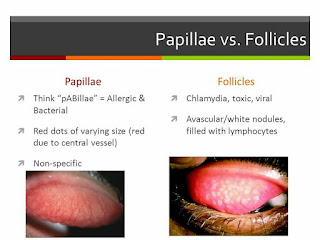
Also known as "pink eye," conjunctivitis causes inflammation of the conjunctiva. This is the transparent, lubricating membrane covering the surface of the eye, except the cornea.
Symptoms of conjunctivitis include:
The most common causes of conjunctivitis include viruses, bacteria, and allergens.
TreatmentIf allergies or adenoviruses are the cause of conjunctivitis, artificial tears may help relieve the symptoms.
A person with conjunctivitis may require antibiotics, depending on the cause of the infection. Eye doctors can prescribe either antibiotic drops or ointments.
Sometimes, oral or intramuscular antibiotics may be necessary.
A chalazion is a growth inside the eyelid. It typically starts off as a painless lump, but it can cause impaired vision and discomfort with time. It typically occurs due to blockage and swelling of an oil gland in the eyelid.
TreatmentChalazia may not require treatment, as they tend to be self-limiting and benign. Research suggests that most cases of chalazia resolve after roughly 1 month with proper eye hygiene techniques. Treatment options include using a warm compress 3–5 times per day for 10–15 minutes.
Medication includes steroids. Or, if an eye doctor suspects that the cause is an infection, a person can take antibiotics instead. For persistent lesions, surgery may be necessary.
Pinguecula causes yellowish growths to develop on the conjunctiva. Eye doctors typically find this condition on the side of the eye closest to the nose.
People with pterygium, or surfer's eye, have fleshy growths on their conjunctiva that may have originated as a pinguecula. A pterygium can stay small, but if it grows large, it may affect a person's vision.
Eye doctors believe that pinguecula and pterygium develop due to exposure to UV light, wind, and dust.
TreatmentAlthough surgeons can remove these growths, they may grow back. Eye protection measures such as wrap-around sunglasses and artificial tears can help prevent regrowth.
A person with a corneal laceration or ulcer requires immediate medical attention to prevent vision loss.
Anyone who thinks that they have a foreign body in their eye should consult with an eye doctor for a full eye examination. A person should also contact an eye doctor if they are unable to identify a foreign object that may be causing eye discomfort.
If treatment for foreign body sensation is unsuccessful, a person should consult an eye doctor for follow-up.
When artificial tears are inadequate to lubricate the eyes, a person should see an eye doctor. They can recommend other treatments and suggest follow-up appointments to prevent the progression to advanced dry eye. People with advanced dry eyes might eventually experience vision loss.
Doctors can also diagnose the cause of dry eye, such as a medical condition or certain medication, and suggest different strategies to treat them.
People with eye infections should consult a doctor to determine whether or not treatment with antibiotics is necessary.
Anyone with eye pain, vision loss, severe discharge, scarring of the conjunctiva, or a frequent feeling that something is in the eye should consult an ophthalmologist or optometrist.
Some frequently asked questions about eye discomfort and removing foreign objects from the eye may include:
Why do I feel like something is in my eye but nothing there?Many eye conditions can cause a gritty sensation in the eye. In many cases, the exact cause may not be obvious or visible.
How do you get rid of something is in the eye that you cannot see?If a person is experiencing a foreign body sensation in their eye, home remedies can help provide relief. Options can include using artificial tears and a warm compress using a warm washcloth. If these do not resolve discomfort, a person should consult a doctor.
What does it mean if your eye feels like it has something in it, it hurts, and keeps watering up?There are many possible causes for why a person may experience eye discomfort. These can include corneal abrasions and lacerations, ulcers, keratitis, dry eye, infections, chalazions, pinguecula, and pterygium.
A person may feel as though there is something in their eye for one of many reasons. Some may involve actual foreign objects, but others may not.
Dry eyes and conjunctivitis are two reasons that a person may feel as though something is in their eye. OTC artificial tears can help resolve this symptom. Other infections and injuries to the eye may require urgent medical attention.
Anyone who suspects that they have an infection or eye injury should consult an eye doctor to prevent long-term damage and vision loss.
Digital Eye Strain Is A Growing Issue As The Muscles Of The Eyes Work Overtime, Warn Vision Experts
Read this article for free!
Plus get unlimited access to thousands of articles, videos and more with your free account!
Please enter a valid email address.
By entering your email, you are agreeing to Fox News Terms of Service and Privacy Policy, which includes our Notice of Financial Incentive. To access the content, check your email and follow the instructions provided.These days, while using your devices, you may be suffering from headaches and burning eyes, experience blurry vision, feel tired — or all of the above.
More than likely, the constant or frequent use of your cellphone, tablet, laptop and television — all the screens in your life — are the cause.
People who are constantly staring at screens and devices may experience eye strain and much more, according to a recent study published in Cureus, The Journal of Medical Science.
BE WELL: TREAT AND PREVENT DRY EYE SYNDROME FROM EXTENDED SCREEN USE
Vision experts weighed in on digital eye strain, a serious medical concern today — and what people can do to reduce the risks.
Here's a deeper dive.
What exactly is digital eye strain?Digital devices like computers and smartphones emit blue light. And as blue light enters the eye, it scatters before reaching the retina, causing our eyes to work overtime to try to focus and process the light from the screen on our devices, said Danny Mathew, O.D., a VSP Vision network doctor with EYEWORKS in Fort Worth, Texas.
VSP Vision is the nation's largest and only not-for-profit vision benefits company.
Vision experts weighed in on digital eye strain, a serious medical concern today — and what people can do to reduce the risks to their eyesight. (iStock)
"The result is visual strain and fatigue known as digital eye strain," said Mathew.
This defocused light is perceived as glare, he said. And "the more blue light in the environment, the greater the glare."
WHY ARE SOME PEOPLE COLOR BLIND? HERE'S THE SCIENCE BEHIND IT, INCLUDING HOW TO RECOGNIZE SYMPTOMS
Blue light is linked to the onset of digital eye strain in as little as two hours of exposure, according to research — and The Vision Council says that more than half of all Americans experience symptoms of digital eye strain.
"These symptoms are a result of the muscles in our eyes overworking to focus on the screen in front of us."
Digital eye strain symptoms can include blurred vision, tired eyes, sore eyes, headaches and dry eyes, said Mathew.
"These symptoms are a result of the muscles in our eyes overworking to focus on the screen in front of us and the impact of the light being emitted from our devices," he added.
"Be sure to take frequent breaks and look at other objects besides screens and close-up devices." (iStock)
When we're using digital devices, we do not blink as much, so our eyes are not getting the correct amount of lubrication — resulting in dry and irritated eyes, Mathew told Fox News Digital.
What can people do to reduce the risks of digital eye strain?There are a few steps to take.
"Adjusting your screen to a more comfortable distance is an easy fix to help minimize digital eye strain," said Jen Wademan, O.D., also a VSP network doctor with Bidwell Optometry in Folsom, California.
ALL EYES ARE ON GLAUCOMA THE 'SILENT THIEF OF SIGHT' — AND THE TRUTH BEHIND 7 MYTHS
"You can do this by either moving your computer screen to arm's distance or pulling your smartphone farther away."
Also, adjusting your device's brightness is another simple step that can help reduce glare and eye strain, she noted.
"Adjusting your screen to a more comfortable distance is an easy fix to help minimize digital eye strain." (Neil Godwin/Future via Getty Images)
Furthermore, a way to combat dry eyes related to regular computer and device use is applying artificial tears, but exercise care in selecting your products, Wademan noted.
"Make sure they are preservative-free and definitely avoid any generic artificial tears, since there were a number of mass recalls earlier this year," Wademan said.
AS EYE DROP RECALLS CONTINUE, HERE'S WHAT YOU NEED TO KNOW TO PROTECT YOUR VISION
"Your eye doctor can help recommend reputable brand options for you," she also said.
The symptoms noted earlier such as eye strain, eye fatigue and headaches "are a result of the muscles in our eyes overworking to maintain clear and focused vision when viewing things up close," Wademan said.
"Get up, walk around, stretch or look out the window to give your eyes a rest."
"To combat this, be sure to take frequent breaks and look at other objects besides screens and close-up devices."
What products may help reduce the risk?Lens products are available that help reduce excessive blue-light exposure. One example of this technology is TechShield Blue AB, said Mathew with EYEWORKS.
"It's an anti-reflective lens coating that reduces exposure to blue light and combats digital eye strain," he said. "It also has a near-clear appearance unlike other blue light-reducing lens products that can give off a strong purple or orange/yellow hue."
If you experience discomfort in your eyes, don't assume it's nothing, experts advise. (Cyberguy.Com)
Some blue-light glasses products may say they have that blue light "blocking" feature, he said — but they may negatively impact a customer's visual experience.
"For example, a product may block more light than wavelengths in the UV/blue range, making it difficult to see in certain lighting conditions," Mathew said.
What day-to-day changes can reduce digital eye strain?Whenever you find yourself spending a long time looking at a digital device, Wademan with Bidwell Optometry recommended taking frequent breaks.
"Get up, walk around, stretch or look out the window to give your eyes a rest," she said.
HERE'S WHAT YOU NEED TO KNOW ABOUT VISION LOSS AND HOW TO SHOW SUPPORT FOR THE VISUALLY IMPAIRED
"Power down your devices before heading to bed," she also said.
Follow the 20-20-20 rule: Every 20 minutes, shift your eyes to look at an object at least 20 feet away for at least 20 seconds. (iStock)
"You may also want to consider lowering the brightness of your screen or enabling blue-light settings such as night mode to help reduce the glare from your devices."
CLICK HERE TO SIGN UP FOR OUR LIFESTYLE NEWSLETTER
Daniel A. Greninger, M.D., spokesperson for the American Academy of Ophthalmology and ophthalmologist at Kaiser Permanente Antioch Medical Center in Antioch, California, said the American Academy of Ophthalmology suggests following the 20-20-20 rule to remember to blink and defocus the eyes.
Every 20 minutes, shift your eyes to look at an object at least 20 feet away for at least 20 seconds.
CLICK HERE TO GET THE FOX NEWS APP
And if you continue experiencing discomfort in your eyes — don't assume it's nothing.
"Instead, see an eye care professional for an eye exam," Greninger said.
For more Lifestyle articles, visit www.Foxnews.Com/lifestyle.

Comments
Post a Comment